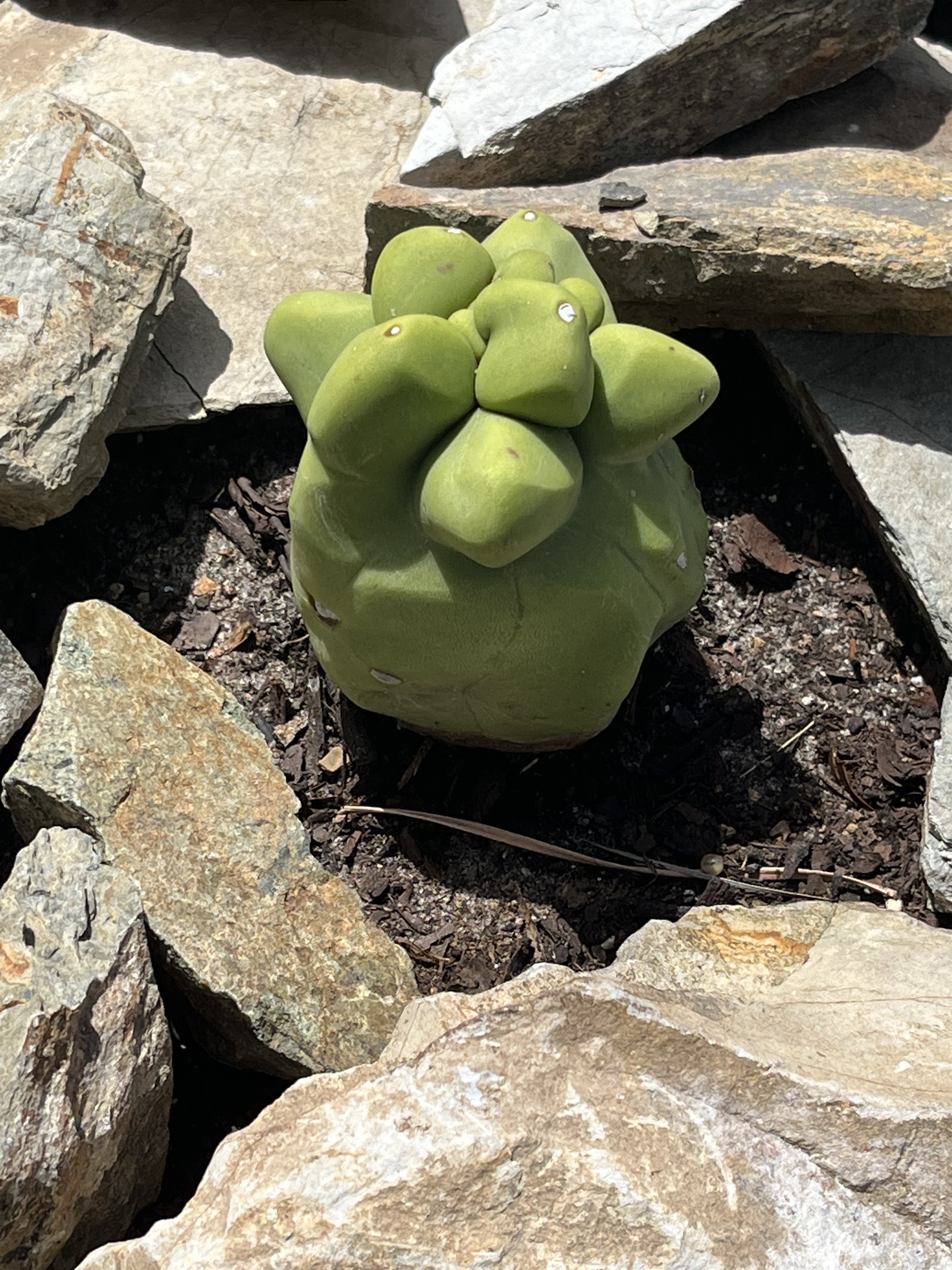

Lophocereus schottii f. monstrosus (Pachycereus schottii f. monstrosus) Photo by: Valentino Vallicelli
Occasionally cacti show abnormal growth forms – called “monstrous” forms, uncharacteristic of the species. An interesting example of this is Lophocereus schottii forma mostruosa (Totem Pole Cactus) a very interesting, easy, slow growing and quite uncommon plant in collections
Origin and Habitat: It is native to the desert regions of mainland Mexico and the Baja California peninsula of Mexico. Small populations also occur in the extreme south of Arizona. The monstrous form is restricted to a small area NE of El Arco, about halfway down the Baja peninsula.
Habitat: It tends to grow in colonies in favourable locations on rocky hillsides. It grows mainly on alluvial plains in dry gravely soils and in desert riparian environments, but its northern limit in southern California can get frosts that can occur on the flat sites where it grows. Here plants are smaller in size than their more southerly counterparts. Reproduction in this part of its range is predominantly asexual and occurs either by the dispersal of stems in the immediate vicinity of parents, or by the long-distance transport of detached stem pieces downstream by floodwaters. Wild plants are heavily weathered and badly marked with just the newest growing tips in good condition.
Lophocereus schottii mostruosa is a naturally occurring mutation, which, although sterile, continues to survive in the wild. This growth form occurs naturally in at least two wild populations in a very soft sandy and gravely soil. In these two locations the plants persist because stem sections break off periodically and root along the sides to produce new plants.
Ecology: Lophocereus schottii has recently been found to have a mutualistic association with a moth, which pollinates the small flowers and lays its eggs in them so that the larvae can develop by feeding on the fruit tissues.Collapse…
Synonyms:
- Pachycereus schottii f. monstrosus (H.E.Gates) P.V.Heath
- Lophocereus schottii f. monstrosus H.E.Gates
See all synonyms of Pachycereus schottii
Common Names include:
ENGLISH: Totem Cactus, Totem Pole Cactus, Totem Pole, Monstrous Whisker Cactus
Description: Lophocereus schottii (Now Pachycereus) is a slow-growing usually trunkless cactus that forms numerous tall, ascending, columnar stems which branch at the base in a candelabra-like arrangement. Stems have a waxy bloom on the surface and reach a height of 3-4 metres (but can grow up to 7m high) and are 10 to 12cm in diameter. They have five to nine widely-spaced ribs. One of the most distinguishing features is that the tips of the mature, taller stems are covered with about twenty sharp long, hairlike, grey bristles. In contrast to the long spines at the tips of mature stems, the juvenile plants have only about five short conical spines Areoles on the bottom part of the stems are woolly, oval and bears white wool. This species blooms in the apical ‘hairy’ part of the stems. Flowers are nocturnal, open at dusk and continue until early morning when the sun burns them out. They are 3-5 cm long, greenish white on the underside and pinkish white inside, and emit an unpleasant odour. One or several flowers are produced from each areole during most of the year, mainly from April to September. The edible fruits are as red as ripe strawberries (with a red pulp), and are seldom seen. Occasionally the ends of stems will spiral a little or dramatically in a right or left hand manner Such top cuttings are much prized by enthusiasts, fetching high prices.
Lophocereus schottii f. mostruosa This is a genetically stable mutation with variable, irregularly shaped ribs with raised, tubercle-like, knobby-looking swellings along the stems, and few (if any) spines or bristles. Stems are ascending, slim, lightly pruinose, and also branch just from the base and occasionally at higher levels, reverting sometimes to normal species growths. Some stems reach 6m, but they usually remain smaller (from 2 to 3m tall). The areoles are few and insignificant and flowers (rarely seen) are pink, seeds virtually unknown.
In habitat and cultivated specimens, the stems mark quite badly with age, due to weathering and old age.


 BEARNOTCH