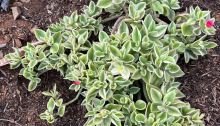
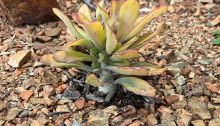
Bryophyllum gastonis-bonneri (maybe?)
CLASSIFICATIONS AND CHARACTERISTICS Plant Division Angiosperms (Flowering Seed Plants) (Dicotyledon) Plant Growth Form Shrub Lifespan (in Singapore) Perennial Mode of Nutrition Autotrophic Maximum Height 0.3 m to 0.5 m Maximum Plant Spread / Crown Width 0.3 m to 0.5 m BIOGEOGRAPHY Native Distribution Madagascar Native Habitat Terrestrial Preferred Climate Zone Desert / Arid Local Conservation…
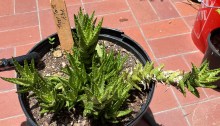
Aloe juvenna “Tiger Tooth Aloe” *
Posted by: Cassidy Tuttle | Updated: March 29, 2022 Aloe juvenna “Tiger Tooth Aloe” is a beautiful Aloe with white spots. The spiked leaves stack and form a rosette. When “happily stressed,” green leaves turn reddish-brown. This page contains affiliate links. Quick Look:
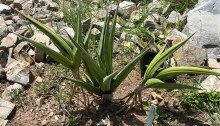
Sansevieria Pinguicula (Walking Sansevieria)
Sansevieria pinguicula is an incredible houseplant that can bring something entirely different to your plant collection. With its strong, stilt-like roots, the plant appears to be walking (albeit very slowly) across the soil. Rare and coveted by houseplant enthusiasts, it’s a tricky plant to find, but if you do get your hands on it, you won’t be disappointed.
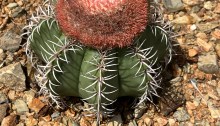
Melocactus Curvispinus (Turk’s Cap Family)
Melocactus Curvispinus Turk’s Cap Cactus (from plantdesert.com). The common name of the Globose-shaped Melocactus curvispinus is “Turk’s Cap Cactus.” It has its origin in Mexico and is widely known for its reddish cap-like structure. Hence, the winter-dormant cacti get their name as the Turk’s Cap. Melocactus curvispinus belongs to the Cactaceae family and usually grows up to a height…
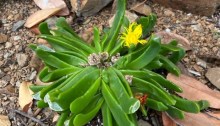
Tonguefig
Source: Wikipedia Glottiphyllum is a genus of about 57 species of succulent subtropical plants of the family Aizoaceae. It is closely related to the Gibbaeum and Faucaria genera. The name comes from ancient Greek γλωττίς glottis “tongue” and φύλλον phyllon “leaf”.[citation needed] The species are native to South Africa, specifically to Cape Province and the Karoo desert. They grow in rocks and soils incorporating slate, sandstone and quartz. Rainfall in their native areas is between 125 and 500 mm (4.9 and 19.7 in),…
 BEARNOTCH